What is English service?
English service is a style of table service in which food comes to the table on platters or in dishes and is portioned onto each guest's plate at the table, rather than plated in the kitchen. Depending on the tradition, a waiter serves each guest from the platter (silver service) or the host carves and plates for the whole table (host service).
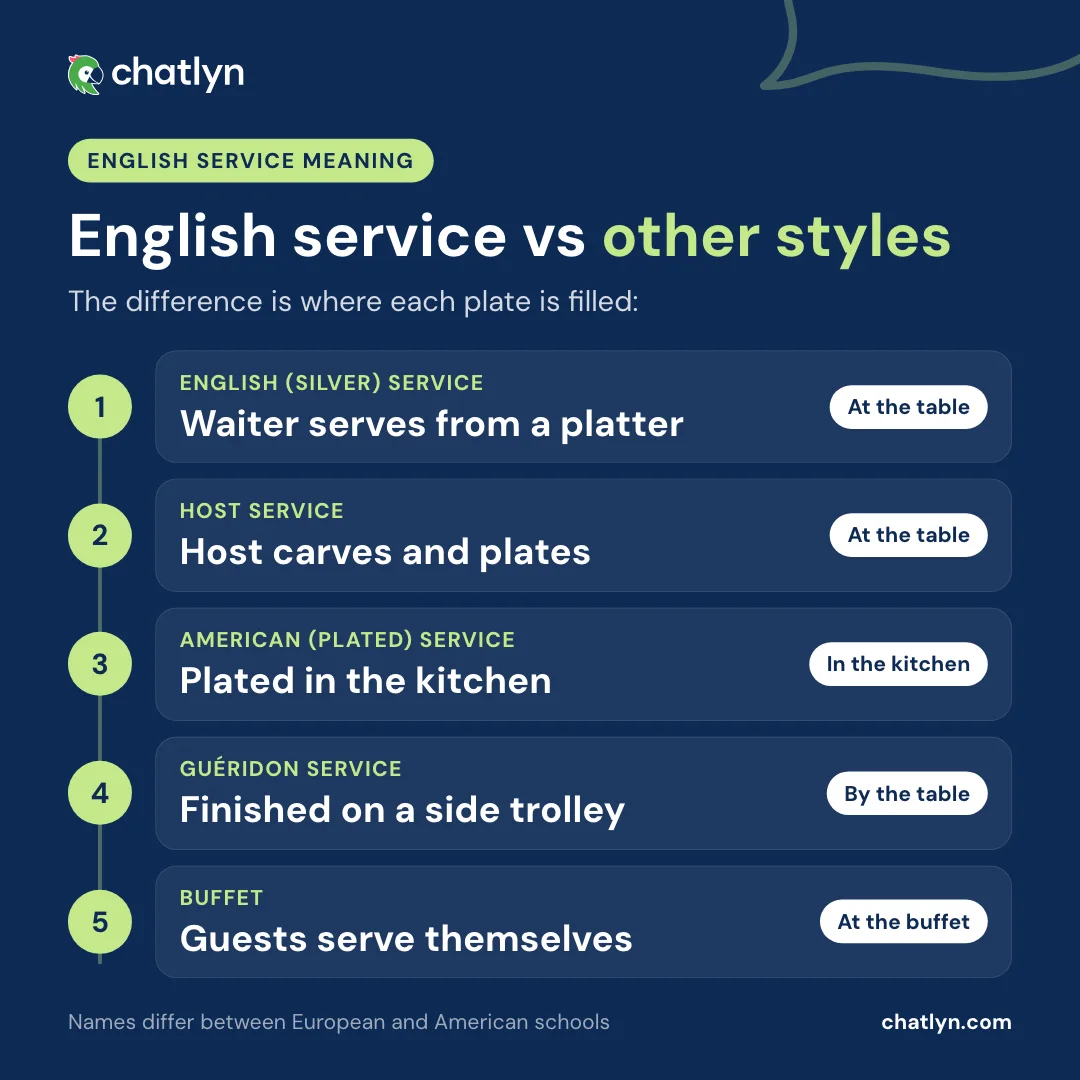
Silver service or host service: two meanings
In European hotel schools and the classic French brigade, English service (service à l'anglaise) is silver service: the waiter presents the platter, then serves each guest from the left with a spoon and fork held in one hand. It is the style of formal banquets, gala dinners and traditional fine-dining rooms.
In many American textbooks, English service means host service: the platters go to the head of the table, where the host carves the meat and fills the plates, and the waiter carries each plate to a guest. It lives on in private dining rooms, family celebrations and roasts carved at the table. The same American sources often call the platter-to-plate style Russian service.
How does English service differ from other dining service styles?
- American (plated) service: each plate is prepared in the kitchen and carried to the guest. It is the most common style in hotel restaurants because it is fast and portions stay consistent.
- Guéridon service: dishes are finished, carved or flambéed on a side trolley next to the table. It is often called French service.
- Buffet: guests serve themselves from a central display, common at hotel breakfasts.
- Family style: shared dishes are placed on the table and passed around by the guests.
English service gives each guest more attention and presentation at the table, but it needs skilled waiters, more time and more staff per cover than plated service. That is why hotels usually keep it for banquets, private dinners and signature evenings.
From the table reservation to the table
Whatever the style, a good dinner service starts before the guest sits down. The number of guests, dietary requirements, the occasion and the time all need to reach the restaurant in advance, and a carved dish or a banquet served at the table depends on them more than most. Hotel guests increasingly ask for a table on WhatsApp instead of calling. With chatlyn, restaurant requests from WhatsApp, the website chat and email land in the same inbox as every other guest conversation. On WhatsApp and the website chat, the AI answers questions about menus and opening times, and the food and beverage team confirms the reservation.
At Hotel Enzian in Obertauern, an adults-only hotel with three à la carte restaurants, WhatsApp campaigns that introduce the restaurants and the week's programme lifted restaurant reservations by 38% (read the case study). For more ideas, see our guide to upselling techniques in hotel food and beverage.
FAQs
What is English service in a restaurant?
English service is table service in which food arrives on platters and is portioned onto each plate at the table, by a waiter (silver service) or by the host (host service), instead of being plated in the kitchen.
Is English service the same as silver service?
In British and European usage, largely yes: English service (service à l'anglaise) is the waiter serving each guest from a platter with a spoon and fork. In American usage, English service usually means host service, and silver service is called Russian service.
Is English service the same as à la carte?
No. À la carte describes the menu (each dish chosen and priced separately), while English service describes how the food is served at the table. An à la carte restaurant can use plated, English or guéridon service.
What is the difference between English and American service?
In American service, the kitchen plates each dish and the waiter carries it to the guest. In English service, the food comes to the table on platters and is served onto the plates there.