What does MOD mean in a hotel?
MOD stands for manager on duty: the manager who is in charge of the whole hotel during a shift, usually in the evening, at night, at weekends and on holidays when the general manager and heads of department are not in the building. The MOD makes the decisions, handles guest complaints and emergencies, and supports the team on shift.
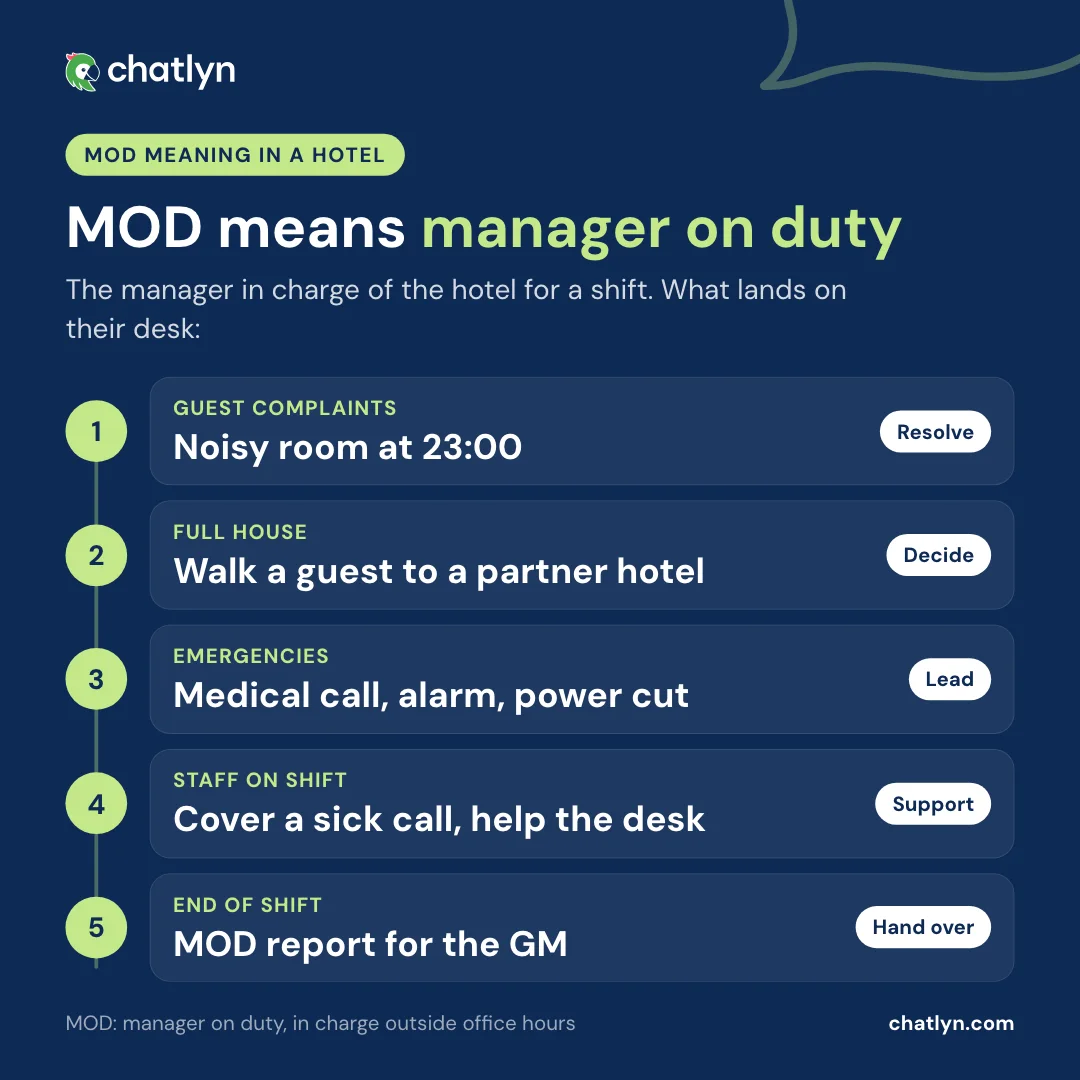
In most hotels the MOD role rotates between senior managers (front office manager, F&B manager, resident manager, sometimes the general manager), so there is always one named person the team can call. The MOD is the face of the hotel for that shift: guests who ask to "speak to a manager" speak to the MOD.
The responsibilities of a manager on duty
The MOD's duties cover a wide range of responsibilities, including but not limited to:
- Resolving guest issues: addressing complaints, special requests or unexpected problems so guests have a positive experience.
- Supervising staff: leading the team on shift, monitoring performance and solving immediate staffing gaps.
- Handling emergencies: managing medical incidents, security threats or challenges such as power cuts and severe weather.
- Ensuring operational continuity: acting as the decision-maker for daily operations when senior managers or heads of department are away, for example when the hotel is overbooked and a guest has to be walked to another hotel.
- Maintaining guest satisfaction: upholding service standards and checking the property's cleanliness, safety and atmosphere on regular walk-rounds.
- Writing the MOD report: a short log of incidents, complaints and decisions for the general manager and the next shift.
Real-world example of an MOD in action
Imagine a guest reports a water leak in their room late at night. The MOD would:
- Calmly reassure the guest and apologise for the inconvenience.
- Quickly arrange for the guest to move to another room, or find alternative accommodation if the hotel is fully booked.
- Contact the maintenance team to address the issue immediately.
- Follow up with the guest the next day, perhaps offering a complimentary breakfast or a discount as a goodwill gesture.
This example shows how the MOD resolves issues quickly, keeps disruption to the guest experience to a minimum and coordinates between departments.
How guest messages reach the manager on duty
More and more late-night problems arrive as a message rather than a call to reception: a guest writes on WhatsApp from the room, or on the website chat before arrival. The MOD can only act on what reaches them, with the full story. In a shared team inbox, every WhatsApp, webchat, email and Booking.com message lands in one place. On WhatsApp, webchat, Facebook Messenger, Instagram and newly created Booking.com inboxes the AI answers routine questions and passes anything it should not handle, such as a complaint, to a colleague on shift. The night receptionist can mention the manager on duty in an internal note, and the MOD gets a notification, takes over the conversation and reads the whole thread before replying to the guest in the same chat.

Every assignment and internal note stays in the conversation, so the MOD report and the handover to the day team start from what was actually said and promised. See how front office teams use chatlyn to share one inbox across shifts, and our guide to hotel guest communication.
Tips for effective performance as a manager on duty
- Stay proactive: anticipate issues before they escalate by regularly checking common problem areas, such as room readiness and public spaces.
- Communicate clearly: keep open lines of communication with staff, guests and relevant departments.
- Stay calm under pressure: emergencies can arise at any moment; the ability to stay composed and follow protocol is critical.
- Use technology: use the property management system (PMS) and a guest messaging platform to track guest requests and handovers between shifts in real time.
- Follow up: always follow up with guests and staff to make sure concerns are resolved to everyone's satisfaction.
How does the MOD handle emergencies?
An MOD's training prepares them for emergencies such as:
- Medical incidents: coordinating with medical professionals and making sure affected guests receive immediate care.
- Security incidents: handling theft, disturbances or other incidents with security staff and, if necessary, the local authorities.
- Natural disasters: carrying out the hotel's emergency plans, including evacuations, power management or guest relocation.
In all cases, the MOD must put guest and staff safety first while keeping disruption to a minimum.
FAQs
What does MOD stand for in a hotel?
MOD stands for manager on duty, the manager in charge of the hotel during a shift, most often in the evening, at night and at weekends.
Is the manager on duty the same as the duty manager?
Mostly, yes. Some hotels use "duty manager" for a permanent role at the front office, while "manager on duty" is a rotation among senior managers. In both cases it is the person with authority to decide on the spot.
What is the difference between the MOD and the general manager?
The general manager is responsible for the hotel as a whole, every day. The MOD takes charge for a single shift, usually when the general manager is not on site, and reports back to them.
What is an MOD report?
A short written log of the shift: incidents, guest complaints and how they were resolved, staffing issues and anything the next shift or the general manager needs to follow up.
