What is food and beverage (F&B)? Meaning and definition in the hotel industry
F&B stands for food and beverage: all the food and drink a hotel sells, and the department that runs it. It covers the breakfast room, restaurants, bars, room service, minibars, banquets and events, and it is often a hotel's second-largest source of revenue after rooms.
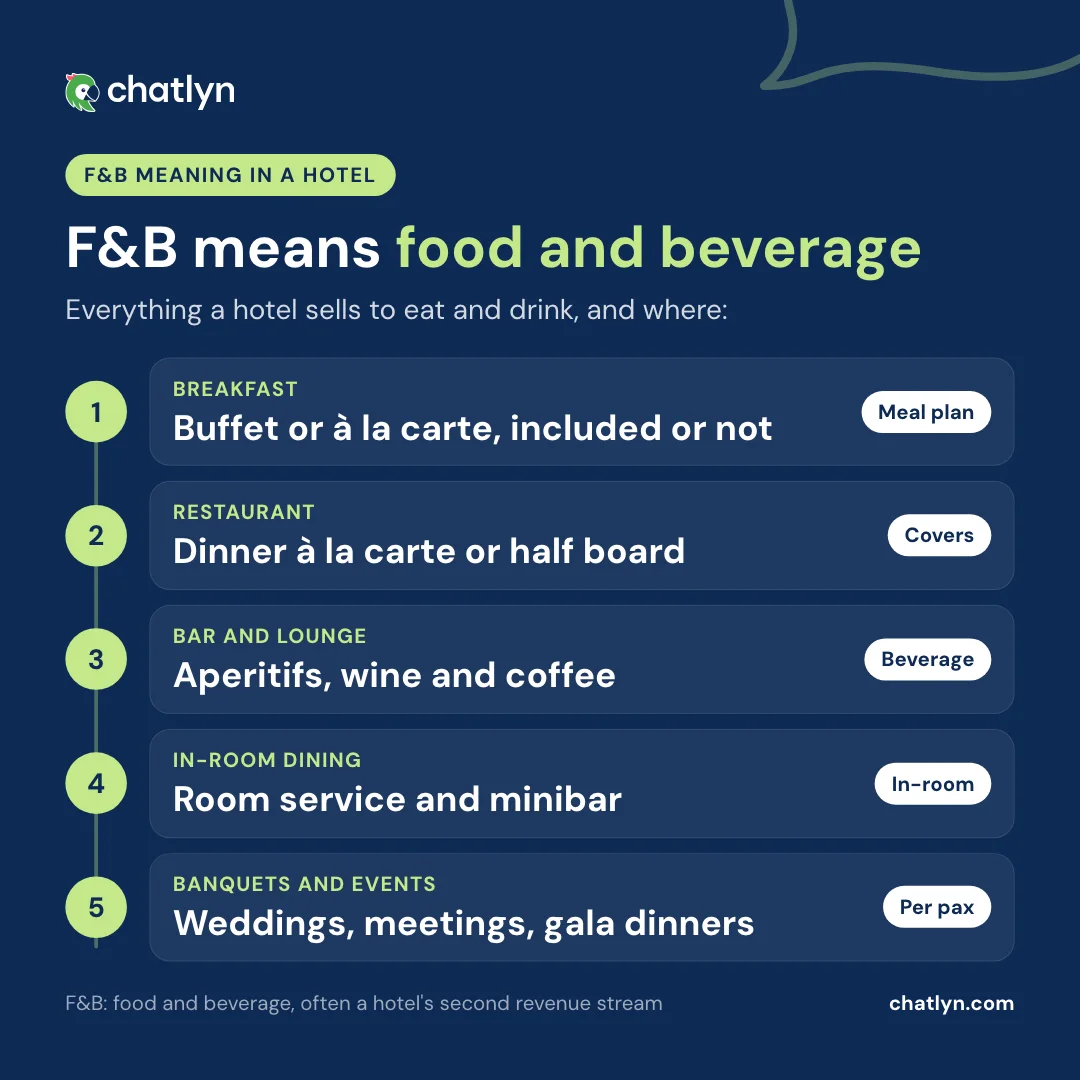
Whether it is a luxury hotel buffet, a rooftop bar or a cosy café, F&B plays a vital role in the guest experience. The F&B department is led by the food and beverage manager, and its output is often counted in covers (one guest served one meal).
Example: A 5-star resort may offer all-inclusive dining, covering breakfast, lunch, dinner and unlimited beverages, while a business hotel may focus on room service and breakfast-included rates for busy travellers.
Popular trends in F&B in the hospitality industry
F&B is constantly evolving, with hotels and restaurants adapting to guest preferences. Here are some of the biggest trends:
- Locally sourced and sustainable ingredients: guests prefer fresh, farm-to-table meals.
- Technology-driven dining: mobile ordering, QR-code menus and table reservations by message.
- Plant-based and vegan options: more demand for vegetarian, vegan and gluten-free dishes.
- Experiential dining: chef-led tasting menus, open kitchens and immersive culinary experiences.
- Health and wellness focus: nutritional menus, detox drinks and functional foods.
- Craft beverages and artisanal drinks: speciality coffees, local craft beers and unique cocktails.
- Fusion cuisine: blending global flavours to create new dishes.
PRO Tip: Want to grow your F&B revenue? Check out our hotel revenue-generating ideas.
How do meal plans and breakfast-included options relate to F&B?
Hotels often bundle F&B services into meal plans to improve the guest experience and increase revenue. Meal plans give guests easy access to food without worrying about extra costs.
Here is how meal plans fit into F&B operations:
- Room only (RO): no meals included, guests pay separately.
- Bed and breakfast (B&B): includes breakfast, popular for short stays and business travellers.
- Half board (HB): breakfast and dinner, ideal for guests who explore during the day.
- Full board (FB): breakfast, lunch and dinner, for families and all-day resort guests.
- All inclusive (AI): all meals, drinks and often snacks and entertainment.
Example: A beach resort may offer an all-inclusive plan that includes cocktails and gourmet dinners, while a budget hotel may only sell room only, letting guests explore local dining.
How can hotels improve their F&B offering?
To keep up with guest expectations and increase revenue, hotels should focus on:
- Market research: understanding guest preferences and popular dining trends.
- Local and authentic dining: partnering with local producers and using regional ingredients.
- Technology integration: using mobile ordering, digital menus and reservations by message.
- Dietary customisation: offering gluten-free, vegan and allergy-friendly options.
- Meal plan upsells: inviting guests to upgrade to half board or full board.
- Themed dining events: hosting BBQ nights, wine tastings or a chef's table.
F&B in guest communication before and during the stay
Most F&B revenue is decided before the guest sits down: whether they book the tasting menu, add breakfast or reserve a table on the evening they arrive. Guests book months ahead and rarely look at the restaurant pages again, so a short message a few days before arrival, with the restaurants and the week's programme and a button to reserve, reaches them while they are planning.
Hotel Enzian Obertauern does exactly this: a WhatsApp message before arrival introduces its three à la carte restaurants and the weekly programme for the dates of the stay, and the hotel saw 38% more restaurant reservations from its WhatsApp campaigns. The guest replies in the same chat and the restaurant team confirms the table.

With chatlyn, these messages go out from the booking in your PMS through guest journey automation. On WhatsApp, the website chat, Facebook Messenger, Instagram and newly created Booking.com inboxes, the AI answers questions about menus, opening hours and meal plans, and passes table requests and special wishes to the team. A guest on room only can be offered breakfast, and a guest on half board the chef's menu, each at the right moment. See how F&B teams use chatlyn, and our guide to upselling techniques in hotel food and beverage.
FAQs
What is F&B in the hospitality industry?
F&B (food and beverage) refers to all food and drink services offered by hotels, restaurants and cafés. It includes meal plans, dining outlets, bars, room service and catering.
What does F&B stand for in a hotel?
F&B stands for food and beverage. In a hotel it means both the food and drink sold to guests and the department (F&B department) that runs the kitchens, restaurants, bars, room service and banquets.
What is the difference between F&B and a meal plan?
F&B covers all hotel dining services, while a meal plan is a pre-paid package that includes breakfast, lunch or dinner with the room.
What does "breakfast included" mean in hotels?
"Breakfast included" means that breakfast is paid for in the room rate, for every guest on the booking, typically as a buffet or à la carte.
How do hotels use technology to improve F&B?
Hotels use AI chatbots on WhatsApp and the website to answer guest questions about menus and opening hours, send restaurant and breakfast offers before arrival, and use QR-code menus and mobile ordering in the outlets.
Final thoughts: the future of F&B in hotels
F&B is changing quickly, with hotels using technology, tailoring meal plans and embracing sustainable dining. Whether it is a Michelin-starred tasting menu or a simple B&B breakfast, the hotels that tell guests about it at the right moment fill more tables. See how chatlyn works for hotel F&B teams.
