Imagine a world where every guest feels like a VIP, bookings manage themselves, and your staff isn’t drowning in repetitive tasks. Welcome to the future of the hotel industry, powered by AI agents. Let’s break down what these tools are, how they work, and why they’re a game-changer for guest experience.
What the Heck is an AI Agent? (And Why Should Hotels Care?)
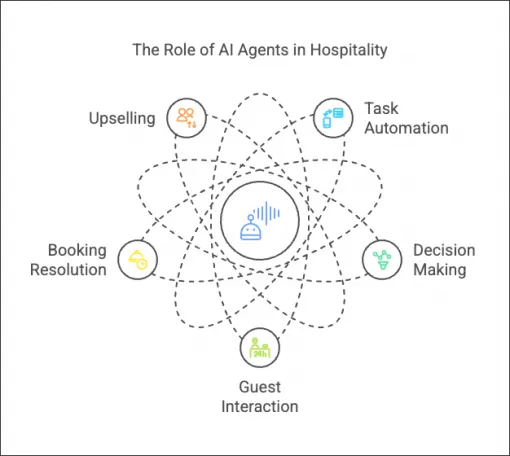
An AI agent is like a digital employee that automates tasks, makes decisions, and interacts with guests or systems, all without coffee breaks. For hotels, this could mean a chatbot resolving a booking issue at 2 AM or a system that upsells spa packages based on a guest’s preferences. Think of it as your 24/7 hospitality ninja.
5 Types of AI Agents Crushing It in the Hotel Industry
Not all AI agents are created equal. Here’s the lineup:
- Simple Reflex Agents: “If a guest asks for towels, send towels.” Basic but reliable for routine tasks.
- Model-Based Agents: Remembers guest preferences. “Mr. Smith hates feather pillows? Noted.”
- Goal-Based Agents: Optimises for outcomes. “How do we increase upsells during check-in? Let’s push that suite upgrade!”
- Utility-Based Agents: Balances priorities. “Should we offer a late checkout or a dining discount? Let’s calculate the revenue impact.”
- Learning Agents: Gets smarter over time. “Hmm, guests booking via Instagram prefer poolside rooms. Let’s adjust recommendations.”
Is ChatGPT an AI Agent? (Spoiler: Sort Of…)
ChatGPT is like the Swiss Army knife of AI: it can write poems, debug code, and even draft hotel responses. But is it a full AI agent for hospitality Not quite. While it’s great at generating text, it lacks the specialised integration (like connecting to your PMS or revenue tools) that hotel-specific platforms offer. For example, platforms like chatlyn are built specifically to integrate with your existing hotel tech stack, enabling real-time communication and personalised guest experiences.
Tip for Hoteliers: When evaluating AI solutions, look for platforms that integrate with your PMS and other systems. This ensures that guest data flows smoothly, enabling highly personalised interactions that drive satisfaction and revenue.
The Best AI Agent for Hospitality? Meet chatlyn
Forget Frankensteining five different tools. chatlyn is the all-in-one AI agent platform built exclusively for hotels. It not only automates tasks but also enables guest interactions across multiple channels. Here’s why it’s a standout:
- AI That Guides Guests to Book Direct: The AI answers guests on WhatsApp, your website chat, Messenger and Instagram in natural language, from your hotel's own knowledge. On the website chat it opens a date picker that takes guests straight to your booking engine with their dates filled in, and your team takes over whenever a guest needs a person.
- Automates Everything: From WhatsApp booking confirmations to post-stay review requests.
- Upsells Like a Pro: “Noticed you booked a romantic dinner? Our sunset champagne package is 20% off tonight!”
- Plays Nice with Others: Integrates with Apaleo, MEWS, and other hotel tech stacks.
- Chatbot on Every Chat Channel: The hotel chatbot answers guests on your website, WhatsApp, Messenger and Instagram right away, and on email it drafts the reply for your team to review and send.
- Smart, Pre-Configured Workflows: Guest journeys timed by your PMS and WhatsApp newsletters to the guests who opted in (at IMLAUER, a 93% open rate).
Real-World Example: At Spa Resort Therme Geinberg, chatlyn's AI resolves 86% of website chat questions without involving the team, and the resort's WhatsApp campaigns reach a 95% open rate, turning guest communication into a revenue driver for the spa.
chatlyn vs. Other AI Agents: Quick Comparison
| Feature | chatlyn | Generic AI Agent Platform |
|---|---|---|
| Hospitality-Specific | Built for hotels | “One-size-fits-none” |
| Integrations | Oracle, Apaleo, MEWS, etc. | Limited |
| Guest Journey Coverage | Booking to post-stay | Fragmented |
AI Agent Examples: Beyond the Hype
If your property runs Oracle's PMS, read how AI agents connect to OPERA Cloud through OHIP. Wondering how this plays out in real life? Here are some examples of AI agents in action:
- Booking Stage: chatlyn’s AI answers questions about rooms and the stay on your website chat and WhatsApp, and sends guests to your own booking engine, so the booking stays direct.
- Check-In: Before arrival, a WhatsApp message brings the guest's online check-in link where your PMS provides one (Mews, Casablanca, OPERA Cloud), and the AI answers last-minute questions around the clock.
- Post-Stay: Sends a thank-you message and a review invitation after check-out, and lets you send offers for the next stay to guests who opted in, keeping them engaged long after check-out.
Hotelier Tip: Use chatlyn’s automated WhatsApp newsletters to keep guests engaged throughout their journey. With open rates like IMLAUER's 93%, these messages help drive repeat bookings and open upsell opportunities.
Why Bother with an AI Agent Platform?
Still manually handling reviews on TripAdvisor? Ouch. An AI agent platform like chatlyn (or alternatives like DeepSeek for analytics or OpenAI for generic tasks) can:
- Cut response time from hours to seconds
- Boost guest satisfaction scores (and your sanity)
- Drive revenue with hyper-personalised offers
Ready to Upgrade Your Hotel’s Tech Stack?
AI agents aren’t just for Silicon Valley startups. With tools like chatlyn, even boutique hotels can compete with big chains. The best part? You don’t need a PhD in tech to use it: just a willingness to work smarter, not harder.
Frequently asked question
Is there hotel AI that connects to the Oracle OPERA PMS?
Yes. chatlyn connects to Oracle OPERA Cloud through OHIP with realtime reservation events, and to OPERA 5 on-premise through scheduled reports over SFTP. The AI answers guests on WhatsApp, webchat, Facebook Messenger, Instagram and newly created Booking.com inboxes with the OPERA reservation context in view, and journeys trigger from PMS events; the AI does not write to the PMS. Details are on the Oracle OPERA Cloud integration page.
P.S. If you’re still using spreadsheets to track guest requests, we need to talk.